Home · Gear
Bunny House Picks
What to look for when you shop for your rabbit, and what to leave on the shelf.
Heads up on links. Some links on this page may be affiliate links, which means Bunny Treat may earn a small commission if you buy, at no extra cost to you. It never changes what I recommend. Read the affiliate disclosure.
How I choose
Rabbits chew, dig and taste everything, so safety comes first. Every pick on this page has to pass these checks.
- Safe to chew. Plain, untreated, unscented and free of small parts a bunny could swallow.
- Good for rabbit bodies. Soft flooring, enough room to stretch, and plenty of hay.
- Built to last. Sturdy things you won’t need to replace every month.
- Fairly priced. A higher price doesn’t make something safer for your bunny.
Specific product picks get added here as I test them. Until then, use the checklists below to shop with confidence in any store.
Shelf: food
Hay and pellets
Hay is most of the diet, and a measured amount of plain, high-fiber pellets covers the rest.
Standlee Premium timothy hay, 50 lb compressed bale
Sun-cured timothy hay, double-compressed and shrink-wrapped so it stays tidy. It’s the hay our rabbits eat every day. It’s sold mainly for horses, and Standlee makes a separate small-animal line, so some owners prefer that. Some reviewers report dirt or mold in their bales, so open the bag, sniff it and look for dust, dampness and weeds before you feed it. Sold at Tractor Supply, not Amazon.
View at Tractor SupplyStandlee Premium alfalfa hay, 50 lb compressed bale
Alfalfa is richer in protein, calcium and calories than timothy, which is what a mother rabbit needs to make milk. We used this bale for our nursing mama and her babies. It’s sold mainly for horses, and one reviewer found it dusty, so check the bag before you feed it. Sold at Tractor Supply, not Amazon.
- Nursing mama: unlimited alfalfa, plus good pellets (about 16 to 18% protein) and fresh water.
- Growing kits: alfalfa is fine while they are young, up to about 7 months, as a main hay.
- After weaning: move mama back to timothy or orchard grass gradually, to avoid too much calcium and weight gain.
- Adults: grass hay stays the main hay for adult rabbits.
Oxbow Garden Select adult rabbit food (8 lb)
A non-GMO, high-fiber pellet made with timothy hay, orchard grass and oat hay. It’s what our nine rabbits eat. Pellets are a small part of the plate, so measure them and always keep fresh hay available. See the Rabbit Diet 101 guide for amounts. With nine rabbits we buy the 25 lb bag on Chewy Autoship, which brings it to the door on a schedule and costs less per pound.
View 8 lb on Amazon View 25 lb at ChewyPellet amounts depend on age, size and weight, so ask your vet if you’re unsure. Young rabbits need a different food than adults.
Shelf: play space
Exercise pens
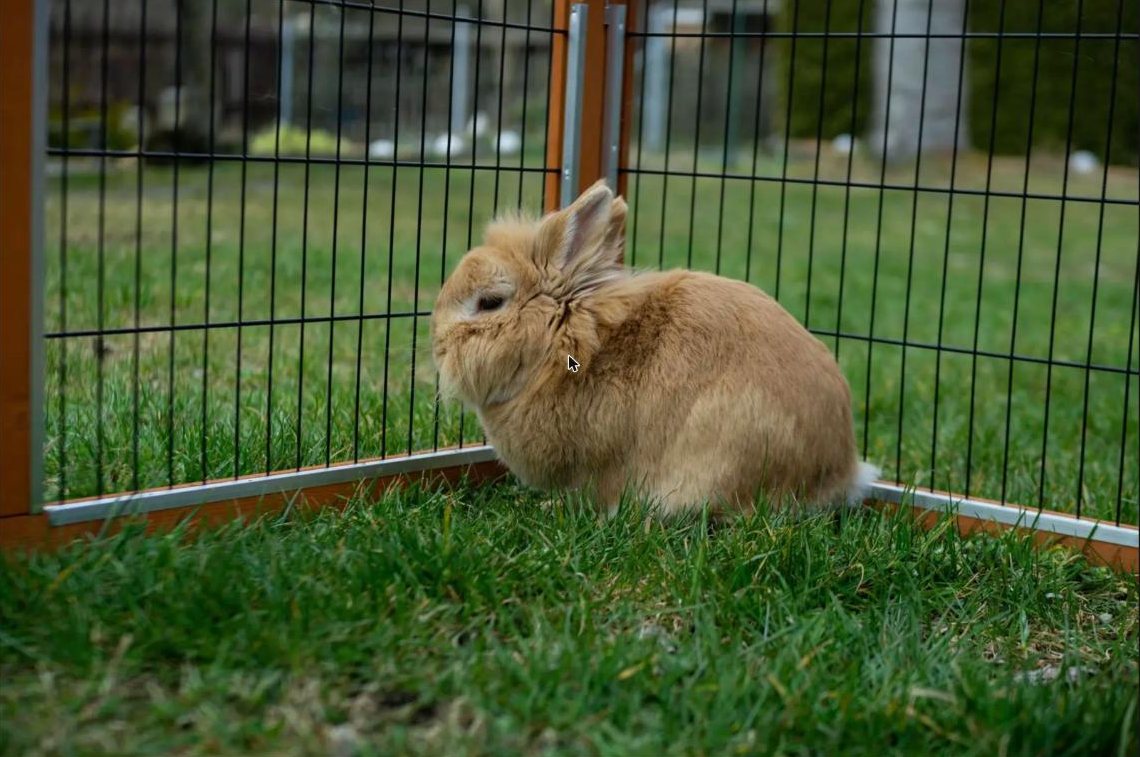
Rabbits need room to run every day. A metal pen is quick to set up, folds flat and can’t be chewed through.
MidWest 36-inch exercise pen, single door
Eight welded metal panels make a 16 sq ft play area. The built-in door means you can walk in and out without stepping over, and 36 inches is tall enough for most rabbits.
View on AmazonMidWest 48-inch exercise pen, no door
The same 16 sq ft layout with extra-tall panels for rabbits that jump. There is no door, so you step over a panel to reach your bunny. Look for the single-door version if you want an easier way in.
View on AmazonJoin two pens for more room
Open one panel on each pen where they meet and snap the pens together. Two pens give you 32 sq ft, or you can run them in a long rectangle or an L-shape. Add a cover or stay close if the pen is outside, since the tops are open.
Pens are sold for dogs, but their wire bars work well for adult rabbits. Baby bunnies can squeeze through the gaps, so use a smaller-gap pen for them.
Shelf: hay
Hay feeders
A rack keeps hay clean, off the floor and easy to reach, so there is always something to munch.
Metal hay feeder rack, 2-pack
A heavy-duty metal frame with hooks that hang on a cage or an exercise pen panel. The wide top makes it easy to fill, and it holds about a day of hay. Each rack is roughly 7 inches long, so it suits one or two rabbits. Buy more for a bigger group.
View on AmazonMetal doesn’t soak up urine or hold a finish, which is why I look for it first. Still keep extra hay in the litter box, where rabbits love to eat.
Shelf: bathroom
Litter boxes
Pick a box your rabbit can step into, turn around in and sit in comfortably.
Low-entry litter pan, 16.5 x 11.8 x 7 inches
A plain plastic pan with a very low 3.5-inch front, so small, young or older rabbits can hop in easily. High sides help keep litter inside. At about 16 inches long it suits dwarf breeds and single small rabbits. Larger rabbits need a bigger box.
View on AmazonMarshall high-back litter pan, 12 x 14 inches
A sturdy plastic pan with a tall back wall that keeps litter and spray off the cage or wall, and a low front for easy hopping in. It’s inexpensive, easy to wipe clean and fits in a corner, which is where many rabbits choose to go. At 12 x 14 inches it works best for small to medium rabbits.
View on AmazonTractor Supply pine pellet bedding, 40 lb
Compressed pine pellets with no glue, binders, perfumes or additives. They soak up liquid and break down into soft bedding, and a 40 lb bag lasts a long time at a low price. It’s what goes in our litter boxes. The listing says the pellets are kiln-dried or rotary-dried pine, so keep the bag and check it. Sold at Tractor Supply, not Amazon.
View at Tractor SupplySkip clumping litter, cedar and fresh pine shavings, since the oils and dust can irritate rabbits. Plain paper, aspen and compressed kiln-dried pellets are better choices. Put fresh hay in the box too. If your rabbit chews the plastic, switch to a metal box.
Shelf: chews and enrichment
Things to chew
Rabbit teeth never stop growing, so safe chewing is part of daily care.
Apple sticks for small animals (2 lb bag)
Plain apple wood sticks for gnawing. Our own rabbits get apple wood, and this is a big bag at a fair price. The listing says the sticks come from pesticide-free orchards, so check the bag when it arrives and skip any that look moldy or treated.
View on AmazonHay is still the main chew. Wood sticks are a bonus. Offer them alongside unlimited hay, and call a vet if your rabbit stops eating.
Shelf: flowers and treats
Dried flower treats
Flowers are a fun, low-sugar treat. Keep them small, since treats should never crowd out hay.
Flower Fusion dried flower treat (1/2 lb)
A simple mix of dried rose, calendula and hibiscus petals, with nothing else on the ingredient list. Offer a small pinch two or three times a week, or tuck some into a foraging toy or a hay-stuffed box.
View on AmazonIntroduce any new treat slowly and watch the droppings. Not sure about a flower? Check the safe foods checker first.
Shelf: travel
Carriers
A hard-sided carrier with a secure door is the safest way to get to the vet.
MidWest Spree travel carrier, 22-inch
A hard plastic shell with ventilated sides, a wide wire door and a built-in handle. It wipes clean in seconds and snaps together with no tools. The inside measures about 20.7 x 13.2 x 14.1 inches. Line the floor with a towel or non-slip mat so your rabbit doesn’t slide.
View on AmazonCarriers are sold for cats and small dogs, and they work well for rabbits. Choose a size where your rabbit can turn around, and keep it out of hot cars.
Shelf: cleaning
Cage and pen cleaning
A clean space keeps smells down and bunnies healthier.
Nature’s Miracle small animal cage cleaner, 24 oz
An enzyme spray that breaks down stains and urine odor in cages and habitats. It’s made for birds and small animals and is rated 4.7 stars at Chewy. Spray it on tough spots during a deep clean. The ingredient list includes isopropyl alcohol and fragrance, so follow the label: take your rabbit, food, water and chew toys out first, let the area air out, then wipe or rinse and dry it fully before your bunny goes back.
View at ChewyFor everyday upkeep, scoop soiled litter daily and swap in fresh hay. Keep sprays and cleaners away from your rabbit’s food.
Gear by category
What to look for, and what to skip
Each card links to the guide that explains the why.
Hay & pellets
Look for: Fresh, green, sweet-smelling grass hay such as timothy, orchard or meadow, plus plain, high-fiber pellets. Alfalfa is better kept for young rabbits.
Skip: Dusty, damp or moldy hay, and seed, nut or colored “treat” mixes.
Diet 101Pens & flooring
Look for: An exercise pen tall enough that your bunny can’t hop out, with soft solid flooring such as a rug or mat, and a hideout inside.
Skip: Small cages and wire floors, which are hard on rabbit feet.
New bunny basicsLitter box & litter
Look for: A box big enough to turn around in, with a low entrance and plain paper-based litter, plus a pile of hay.
Skip: Clumping clay, cedar, pine and scented litters.
Litter trainingChews & toys
Look for: Untreated willow, apple wood, plain cardboard, grass mats and hay-based toys that are safe to nibble.
Skip: Painted or treated wood, scented items and toys with small plastic parts.
Bunny-proofingBowls & water
Look for: A heavy, wide ceramic bowl that won’t tip, washed every day. Many rabbits drink more from a bowl than a bottle.
Skip: Lightweight bowls that get flipped, and bottles that clog or drip.
New bunny basicsCarriers
Look for: A sturdy carrier with secure latches and a top opening, a non-slip mat inside, and a plan to keep your bunny cool.
Skip: Flimsy carriers, and leaving your rabbit in a hot car, even for a minute.
New bunny basicsBook
Bunnies Love Flowers
My book, written by the person behind this site.
Quick answers
Shopping FAQ
Do I need to buy everything at once?
No. Start with hay, water, a safe space, a litter box and a carrier. Add toys and extras as you learn what your bunny likes.
Are wooden chew toys safe?
Plain, untreated wood such as willow or apple is commonly used. Avoid anything painted, treated or scented.
Can I use a cage?
A large pen with plenty of daily exercise time is better than a small cage. See the New Bunny Care Basics guide.
Where should I start?
Read New Bunny Care Basics and print the free Starter Kit once it’s available.
General care information, not veterinary advice. If your rabbit seems unwell, call a vet who treats rabbits. Keep learning with House Rabbit Society and the Association of Exotic Mammal Veterinarians.
Last updated October 23, 2026.