Care guides · Diet
Rabbit Diet 101: What to Feed Your Bunny
A healthy rabbit diet is mostly hay, with a salad on the side, a spoonful of pellets and treats only now and then.
The plate at a glance
What a day of eating looks like
A rabbit’s gut is built to keep moving on fiber all day, so the balance matters more than any single food. These amounts are for healthy adult rabbits.
- Hay, about 80%
- Greens, 10–15%
- Pellets, about 5%
- Treats, 0–5%
Hay
Unlimited
A fresh pile of grass hay at least as big as your bunny, every day.
Leafy greens
1 cup per 2 lb
Packed cups, split across a few kinds.
Pellets
¼ cup per 5 lb
Plain and timothy-based. A spoonful, not a bowl.
Fruit & treats
1 tbsp per 5 lb
The most for the whole day, and not every day.
Want the numbers for your own bunny? Try the daily plate calculator.
Hay is the main course
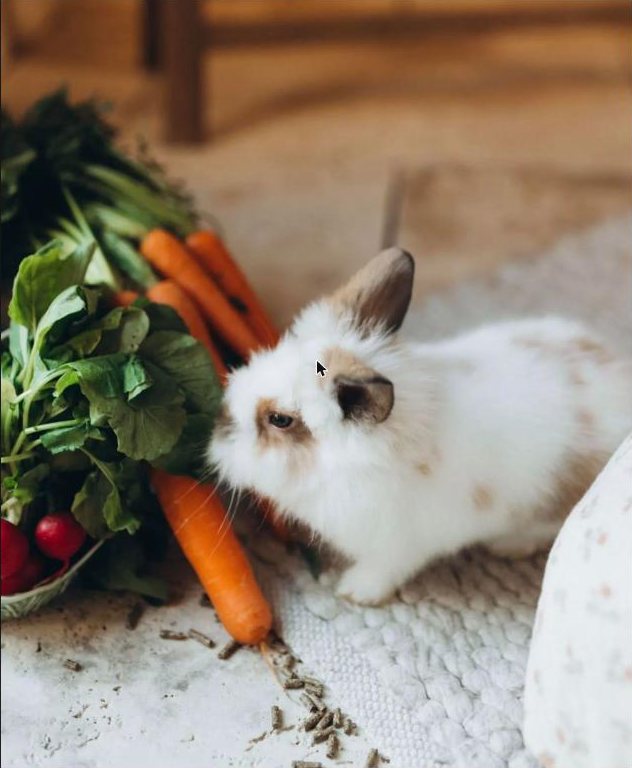
Hay does two jobs. The fiber keeps your rabbit’s gut moving, and the constant chewing wears down teeth that never stop growing. If you only change one thing about your bunny’s diet, make it more hay.
- Offer unlimited grass hay. Timothy, orchard grass, meadow hay and oat hay are all good choices. Mixing a few keeps things interesting.
- Make the pile as big as your bunny and top it up through the day. Many rabbits eat most of their hay while they use the litter box, so put a pile at one end of it.
- Look for green, fragrant, dust-free hay. Skip anything damp, moldy or very dusty. Buy smaller bags more often, because stale hay loses its smell and its appeal.
- Save alfalfa for young bunnies. It is richer in protein and calcium, so adults do best on grass hay. Ask your vet when to make the switch for a growing rabbit.
Fresh greens
A daily salad adds variety, moisture and nutrients. Aim for about one packed cup per 2 pounds of body weight, split across a few different greens.
Good everyday choices: romaine, red or green leaf lettuce, cilantro, basil, mint, dill, arugula, bok choy, endive, escarole, dandelion greens and carrot tops.
Rotate rather than serve daily: kale, spinach, Swiss chard, beet greens, collards and parsley are higher in calcium or oxalates. A little is fine, as part of a mix.
Small portions only: cabbage, broccoli and Brussels sprouts can cause gas in some rabbits.
Skip iceberg lettuce. It has little nutrition and is hard on tummies.
Wash everything, and only offer plants and flowers that haven’t been sprayed. Not sure about a green? Check it in the food checker.
Pellets, measured
Pellets are a supplement, not the meal. Choose a plain, timothy-based pellet for adults and measure it: about ¼ cup per 5 pounds of body weight per day.
- Pick uniform pellets. Avoid colorful mixes with seeds, nuts, dried fruit or crunchy bits. Rabbits pick out the sugary pieces and skip the healthy ones.
- Cut back if hay gets ignored. A bowl that is always full can crowd out the hay your bunny needs.
- Growing bunnies are different. Young rabbits eat more and usually get different pellets, so follow your vet’s advice.
Treats, in tiny amounts
Fruit and carrots are sugary, so think of them as candy. A day’s treats should add up to about 1 tablespoon per 5 pounds of body weight, and most days can have less.
Good treat choices: a thin slice of apple (no seeds or core), one small strawberry, a few blueberries, a coin-sized slice of banana, a small cube of papaya, pineapple or watermelon, and a thin slice of carrot.
For something calorie-free, offer untreated apple or willow twigs to chew, or scatter a few safe flowers on the salad.
Bunnies love flowers. Our book, Bunnies Love Flowers, covers nine edible flowers, four treat recipes to make at home, feeding tips and the flowers to keep out of reach.
Get the book on AmazonWater
Rabbits drink a lot, especially when they eat plenty of hay. Offer fresh water every day. Many rabbits drink more easily from a heavy ceramic bowl than from a bottle, and a bowl is simple to rinse. Wash it daily.
What to skip
Some foods are unsafe, and some just upset the gut. Keep these away from your bunny:
- Chocolate, candy and sweets
- Avocado
- Onions, garlic, leeks and chives
- Iceberg lettuce
- Potatoes, and raw beans
- Rhubarb
- Bread, crackers, cereal, cookies and other human snacks
- Nuts and seeds
- Dairy, including yogurt drops
- Tomato leaves and stems, and many houseplants and garden flowers
Search the food checker for a quick yes, sometimes or never on dozens of foods and flowers.
Changing foods safely
- Add one new food at a time, in a small amount, and wait a couple of days before adding another.
- Switch hay or pellets gradually, mixing the new food into the old over a week or two.
- Watch the droppings. Big, round and dry is what you want. Smaller, softer or fewer droppings after a new food mean it should go back off the menu.
What normal droppings look like
Rabbits make two kinds of droppings. The ones you see are round, dry and fairly large. The other kind, called cecotropes, are soft, shiny clusters that rabbits usually eat straight from the source, often at night. That is normal and healthy.
If you often find uneaten cecotropes, or the droppings turn tiny, misshapen or sparse, mention it to your vet. It can point to a diet that is too rich or to a health problem.
Know the signs
Stopped eating or pooping? Call a vet now.
Rabbits hide illness until it’s serious, and a slowed gut can turn life-threatening fast. If your bunny eats nothing or makes no droppings for 12 hours, or has a swollen belly, call a vet who treats rabbits or an emergency clinic. Don’t wait for morning.
Quick answers
Rabbit diet FAQ
Can rabbits eat carrots every day?
Not as a staple. Carrots are high in sugar, so a thin slice is a treat. The leafy tops are a better everyday choice.
How much hay is enough?
Unlimited. Your rabbit should always have fresh hay available, in a pile at least as big as the rabbit.
My bunny won’t eat hay. What can I do?
Try a different grass hay, mix a few kinds, and tuck hay into cardboard tubes or paper bags. Check that pellets and treats aren’t filling your bunny up. If your rabbit stops eating, or has been eating much less hay than usual, call a vet who treats rabbits.
Is lettuce okay for rabbits?
Yes for romaine and red or green leaf lettuce. No for iceberg lettuce, which has little nutrition and can upset the tummy.
Do baby rabbits eat the same food?
No. Young rabbits have different needs, including more protein and calcium. Follow your vet’s advice on hay and pellets until your rabbit is grown.
Do rabbits need vitamins or salt licks?
A balanced diet of hay, greens and plain pellets covers most healthy adult rabbits. Ask your vet before adding supplements.
General care information, not veterinary advice. Every rabbit is different, so check with a vet who treats rabbits about your bunny’s diet. Keep learning with House Rabbit Society and the Association of Exotic Mammal Veterinarians.
Last updated October 23, 2026.